What is semantic search and why does it matter for e-commerce?

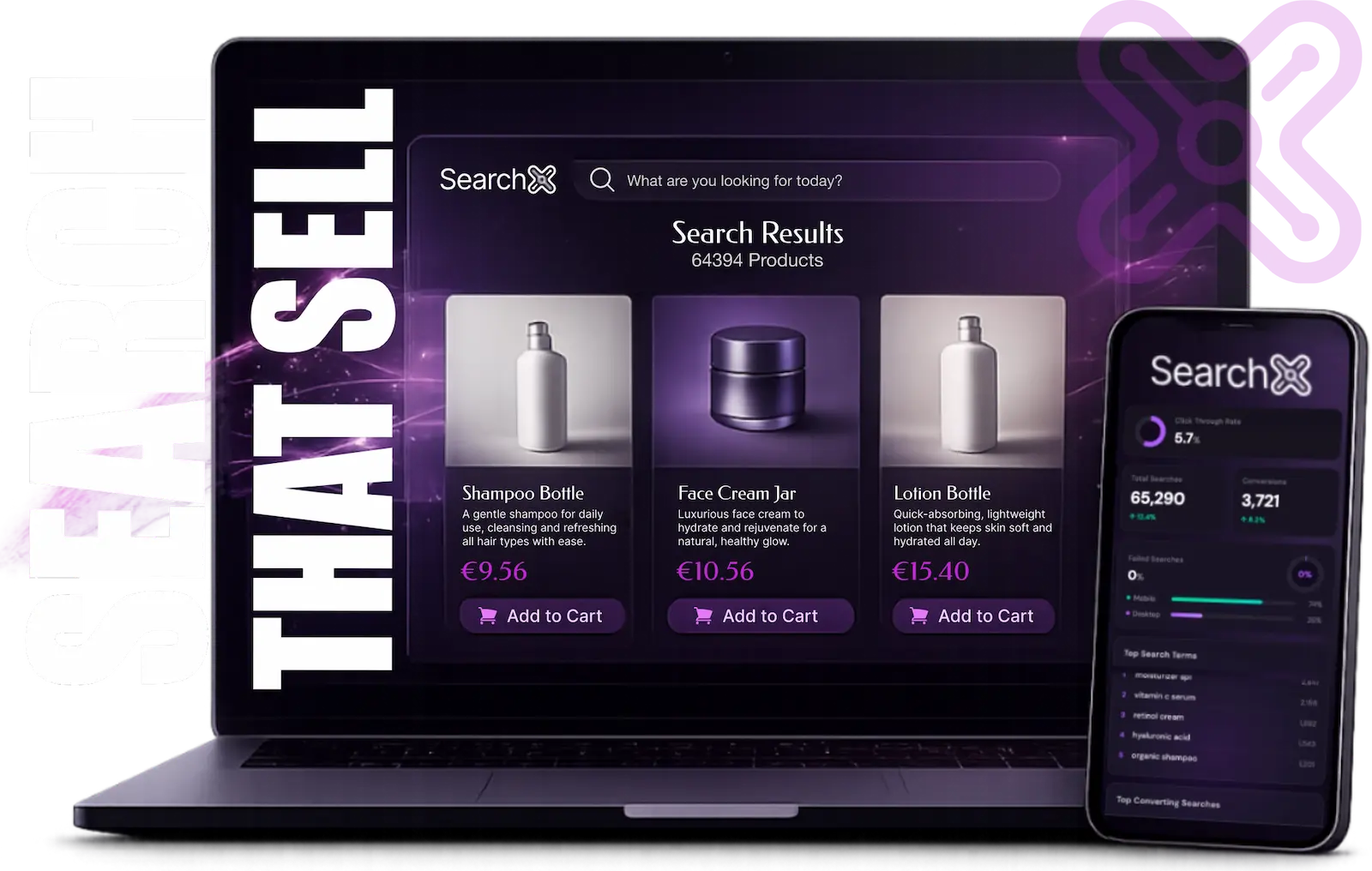
What is semantic search?
Semantic search understands the meaning behind search queries, not just keyword matches. When a customer searches for "wireless earbuds for running," semantic search knows they want Bluetooth earbuds with features like sweat resistance and secure fit — even if those exact words aren't in the product title.
Traditional keyword search looks for exact matches. Type "sneakers" and you only get products with "sneakers" in the title. Semantic search connects "sneakers," "trainers," "running shoes," and "athletic footwear" — because they mean the same thing.
For e-commerce, this means fewer zero-result searches, better product discovery, and higher conversions.
How does semantic search work?
Semantic search uses embeddings — mathematical representations of words and phrases that capture meaning. Words with similar meanings have similar embeddings. The search engine compares the customer's query embedding to product embeddings and returns the best matches.
Here's what happens:
- Customer types "laptop for students"
- Search engine creates an embedding for the query
- It compares that embedding to product embeddings in your catalog
- It returns laptops tagged with "student," "budget," "portable," "lightweight" — even if "student" isn't in the title
Because matching happens on meaning, related terms connect without a hand-built synonym list: a search for "computer" can surface products titled "laptop".
Why does semantic search matter for e-commerce?
Because customers don't search like robots. They type natural language: "black dress for wedding," "cheap phone under 300," "tsanta gia sxoleio" (Greeklish for school bag).
Traditional search fails on:
- Synonyms — "sofa" vs "couch," "sneakers" vs "trainers"
- Misspellings — "adiddas," "nkie," "iphone 16"
- Natural language — "shoes for wide feet" instead of "wide width shoes"
- Greeklish — "tsanta" instead of "τσάντα" (Greek stores only)
Semantic search handles all of this. It understands that "adiddas" means Adidas, "tsanta" means bag, and "shoes for wide feet" should return products tagged "wide fit."
The result: Fewer zero-result searches, better product matches, higher conversions. Stores with semantic search see 15-25% fewer dead ends and 2-3x higher conversion rates among search users (Algolia, 2024).
Semantic search vs keyword search
| Keyword Search | Semantic Search |
|---|---|
| Matches exact words | Understands meaning |
| "sneakers" ≠ "trainers" | "sneakers" = "trainers" |
| Fails on typos | Handles typos automatically |
| Zero results for Greeklish | Greeklish works (Greek stores) |
| Requires manual synonym lists | Matches related terms by meaning |
Example: Customer searches "cheap iPhone"
- Keyword search: Returns only products with "cheap" in title (probably zero)
- Semantic search: Returns affordable iPhone models, refurbished iPhones, budget alternatives
Do I need semantic search for my store?
If you sell more than 100 products, yes. Here's why:
- 40% of shoppers use search before browsing categories (Forrester, 2024)
- Search users convert at 2-3x the site average (Algolia, 2024)
- 72% of e-commerce sites fail basic search expectations (Baymard Institute, 2024)
If your search bar is the default that shipped with WooCommerce or OpenCart, it's keyword-based. That means:
- No typo tolerance
- No synonym support
- No Greeklish (Greek stores)
- No natural language understanding
Switching to semantic search fixes all of this. The setup takes 5 minutes — faster than configuring Google Analytics.
How to implement semantic search
You have two options:
- Build it yourself — Use OpenAI embeddings, Pinecone vector database, custom ranking logic. Budget: 40-80 hours of dev time.
- Use a platform — SearchX, Algolia, Elasticsearch. Budget: 5 minutes setup, €49-€800/month.
Most stores choose option 2. The ROI is immediate — fewer failed searches, higher conversions, better analytics.
SearchX handles typos, synonym groups, and Greeklish (for Greek stores) out of the box. For natural language queries, its AI semantic search is an opt-in feature (currently in Beta) that matches by meaning using embeddings generated with your own OpenAI API key.
SearchX is an AI-powered search engine for e-commerce. 5-minute setup, from €49/month, 14-day free trial. See it live · Check the docs
Related: See pricing & start free trial • Compare SearchX to alternatives • Read FAQ
Sources: Algolia/Forrester 2024 · Baymard Institute 2024 · Algolia Search Solutions